Plastic Surgery
19 Aug 2026
Abdominal Liposuction at University Hospital Sharjah
Reviewed by

Prof. Dr. Tarek Ibrahim Mahdi
HOD & Consultant General; Bariatric Surgeon
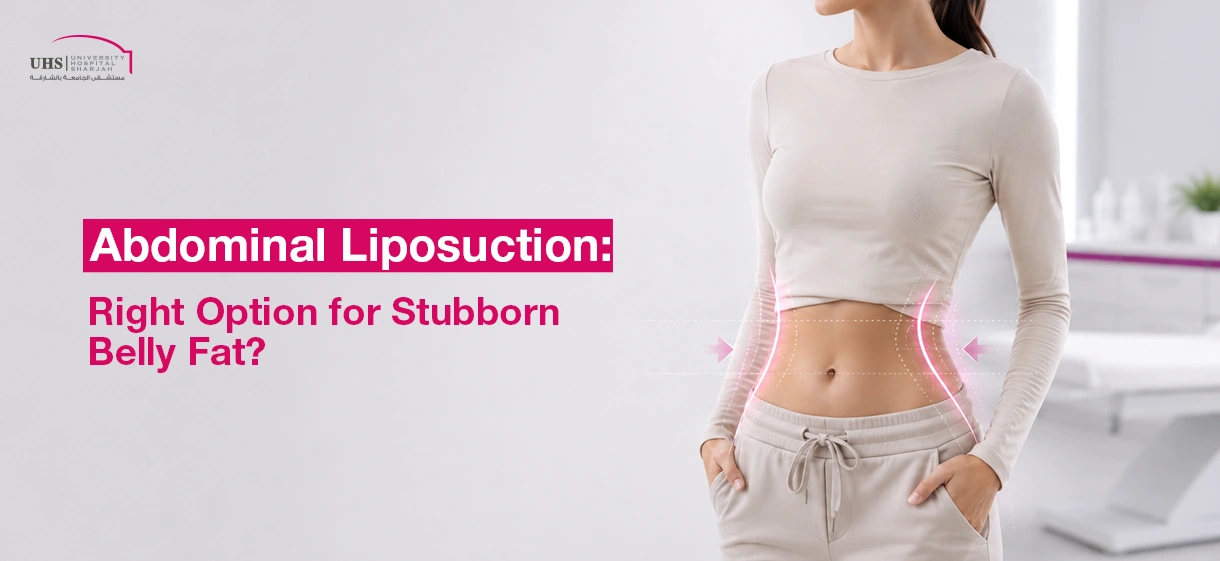
Stubborn abdominal fat can remain even after consistent dieting, regular exercise, and long-term weight management. Genetics, aging, hormonal changes, pregnancy, and previous weight fluctuations can all influence where the body stores fat and how easily it responds to lifestyle changes.
Abdominal liposuction is a body-contouring procedure designed to remove localized fat deposits beneath the skin and improve the shape and proportions of the abdomen. It is not a weight-loss treatment, a substitute for exercise, or a procedure for removing the deeper visceral fat surrounding the internal organs.
At University Hospital Sharjah, patients considering abdominal contouring receive a personalized assessment to determine whether liposuction, a tummy tuck, a combined procedure, or a non-surgical approach is most appropriate for their anatomy and goals.
Understanding how abdominal liposuction works, what it can and cannot achieve, and how it differs from abdominoplasty can help patients make informed decisions about treatment.
What Is Abdominal Liposuction?
Abdominal liposuction is a surgical body-contouring procedure that removes selected deposits of subcutaneous fat from the abdomen. Subcutaneous fat is the soft, pinchable fat located directly beneath the skin.
During the procedure, a plastic surgeon makes small incisions and inserts a thin instrument known as a cannula. The cannula is used to loosen and remove fat cells through controlled suction, reshaping selected areas of the abdomen.
Treatment may focus on:
The upper abdomen
The lower abdomen
The waist
The flanks or “love handles”
Areas surrounding the navel
Uneven pockets of localized fat
Liposuction may be suitable for patients who are close to a stable, healthy weight but continue to have localized fat that does not respond adequately to diet and physical activity.
It is important to understand that the procedure is intended to improve body contour rather than produce major weight loss. The amount of fat that can be removed safely depends on the patient’s health, body composition, treatment area, surgical plan, and the setting in which the procedure is performed.
What Causes Lower Belly Fat?
Lower abdominal fullness may develop for several reasons, including:
Genetic fat-distribution patterns
Aging and changes in metabolism
Pregnancy-related body changes
Weight gain or repeated weight fluctuations
Reduced physical activity
Hormonal changes
Loss of abdominal muscle tone
Accumulation of subcutaneous fat
Increased visceral fat
Loose skin after pregnancy or significant weight loss
The appearance of a protruding abdomen does not always result from fat alone. Muscle separation, known as diastasis recti, abdominal wall weakness, bloating, hernias, excess skin, and internal visceral fat can also affect abdominal shape.
A medical consultation is therefore essential before selecting a treatment.
The Difference Between Visceral Fat and Subcutaneous Fat
Abdominal fat is generally divided into two primary types:
Subcutaneous fat lies directly beneath the skin. It is soft, pinchable, and may be treated with liposuction in appropriately selected patients.
Visceral fat is located deeper inside the abdominal cavity, surrounding organs such as the liver and intestines. It is associated with increased metabolic and cardiovascular health risks and cannot be removed through liposuction.
Subcutaneous fat | Visceral fat |
Located beneath the skin | Located around the internal organs |
Usually soft and pinchable | Often contributes to a firmer, more rounded abdomen |
Influences external body contour | Has stronger associations with metabolic health risks |
May be removed with liposuction | Cannot be removed through liposuction |
Can be influenced by weight changes | Is best reduced through medically appropriate weight management and lifestyle changes |
Patients with significant visceral fat may need support with nutrition, physical activity, weight management, and the treatment of related health conditions before cosmetic abdominal surgery is considered.
What Is a Tummy Tuck (Abdominoplasty)?
A tummy tuck, medically known as abdominoplasty, is a surgical procedure that removes excess abdominal skin and may tighten weakened or separated abdominal muscles.
Unlike abdominal liposuction, which primarily targets localized subcutaneous fat, a tummy tuck is designed for structural concerns such as:
Loose or hanging abdominal skin
Significant skin laxity after weight loss
Pregnancy-related stretching
Separation of the abdominal muscles
A lower abdominal overhang
Changes in the position or appearance of the navel
Combined excess skin and localized fat
During abdominoplasty, the surgeon typically makes an incision across the lower abdomen. Excess skin is removed, the abdominal wall may be repaired when necessary, and the remaining skin is repositioned to create a smoother contour.
Liposuction may be combined with a tummy tuck to address surrounding fat deposits and refine the waistline, but the decision depends on the patient’s anatomy and safety assessment.
The Difference Between Liposuction and a Tummy Tuck
Abdominal liposuction | Tummy tuck |
Removes localized subcutaneous fat | Removes excess skin and may repair separated muscles |
Uses small incisions for cannula access | Requires a longer lower-abdominal incision |
Does not remove substantial loose skin | Designed to address significant skin laxity |
Does not repair abdominal muscle separation | May tighten or repair the abdominal wall |
Best suited to patients with reasonably elastic skin | Often suitable after pregnancy or major weight loss |
Usually involves a shorter recovery | Generally requires a longer recovery |
Produces smaller scars | Produces a longer permanent scar |
May be combined with abdominoplasty | May include liposuction for additional contouring |
The most suitable procedure depends on whether the main concern is fat, loose skin, muscle separation, or a combination of these factors.
Common Reasons for Undergoing Abdominal Liposuction
Patients may consider abdominal liposuction for several cosmetic and personal reasons.
Common motivations include:
Getting rid of stubborn belly fat that remains despite healthy habits
Improving the contour of the upper or lower abdomen
Reducing localized fullness around the waist
Creating better balance between the abdomen, hips, and torso
Addressing genetically determined fat deposits
Refining the abdomen after stable weight loss
Improving how clothing fits
Enhancing confidence in body proportions
Correcting mild contour irregularities or asymmetry
Abdominal liposuction should be based on personal goals and realistic expectations rather than external pressure.
Benefits of Abdominal Liposuction
Potential benefits include:
More defined abdominal contours
Reduction of localized subcutaneous fat
Improved proportion between the waist and torso
Long-lasting removal of treated fat cells
Small, strategically positioned incisions
A treatment plan tailored to the patient’s anatomy
The possibility of combining abdominal and flank contouring
Improved fit of certain clothing
Enhanced confidence for appropriately selected patients
The removed fat cells do not grow back. However, the remaining fat cells can enlarge if the patient gains weight after surgery. Maintaining a stable weight is therefore important for preserving the result.
Final outcomes are not immediate. Swelling may temporarily conceal the new contour, and the abdomen generally becomes more defined as healing progresses.
Risk Factors and Eligibility Requirements for the Procedure
Abdominal liposuction is surgery and carries potential risks. Careful patient selection, an appropriate surgical setting, and experienced medical care are essential.
Possible risks include:
Bleeding
Infection
Fluid accumulation
Persistent swelling
Bruising
Numbness or altered sensation
Uneven contours
Asymmetry
Skin rippling or looseness
Poor wound healing
Changes in pigmentation
Reactions to anesthesia
Blood clots
Fat embolism
Injury to surrounding structures
Need for corrective surgery
The likelihood of complications may increase with extensive treatment, large-volume fat removal, smoking, poorly controlled medical conditions, obesity, or combining several major procedures.
Who Is a Suitable Candidate for Abdominal Liposuction?
A suitable candidate is generally someone who:
Is in good overall health
Has localized, pinchable abdominal fat
Is close to a stable and sustainable body weight
Has reasonably firm and elastic skin
Does not smoke or vape, or is prepared to stop as directed
Has realistic expectations
Understands that liposuction is not a weight-loss solution
Is willing to follow postoperative instructions
Has no untreated condition that would make surgery unsafe
Is seeking the procedure for personal reasons
Age alone does not determine eligibility, but skin elasticity, health status, healing capacity, and treatment goals are important considerations.
Medical Conditions That May Prevent Liposuction Surgery
Liposuction may not be appropriate, or may need to be postponed, in patients with:
Uncontrolled diabetes
Severe cardiovascular or pulmonary disease
Active infection
Untreated blood-clotting disorders
A history of serious blood clots without appropriate management
Significant immune-system impairment
Poor circulation
Severe liver or kidney disease
Unstable body weight
Severe obesity
Conditions that impair wound healing
Unrealistic expectations
Pregnancy or recent childbirth
Certain untreated abdominal wall conditions
Some medications and supplements can also increase bleeding or interact with anesthesia. Patients must disclose all prescription medicines, over-the-counter products, vitamins, herbs, hormones, and weight-loss drugs during consultation.
A medical condition does not always permanently exclude someone from surgery. It may require additional assessment, specialist clearance, treatment optimization, or a different approach.
Signs and Symptoms That May Require Surgical Intervention
Abdominal liposuction is usually elective rather than medically required. No single symptom automatically means that surgery is necessary.
A surgical consultation may be appropriate when a patient has:
Persistent localized abdominal fat despite stable weight and healthy habits
A disproportionate abdominal contour
Pinchable fat beneath skin that retains good elasticity
Fat deposits affecting the waist and flanks
Mild contour irregularities after weight loss
Combined fat and skin concerns that may require liposuction or abdominoplasty
Loose abdominal skin after pregnancy or substantial weight loss
Suspected abdominal muscle separation
Significant emotional distress related to a persistent contour concern
Some abdominal symptoms require medical assessment rather than cosmetic surgery. Persistent abdominal pain, unexplained swelling, a firm internal abdomen, a new mass, digestive symptoms, or a suspected hernia should be evaluated to identify the underlying cause.
Steps and Stages of Tummy Tuck Surgery
Because some patients who request abdominal liposuction are better suited to abdominoplasty, understanding the tummy-tuck process is helpful.
A typical procedure may involve:
1. Preoperative Assessment
The surgeon reviews the patient’s health, medications, abdominal anatomy, skin quality, muscle tone, scars, treatment goals, and risk factors.
2. Anesthesia
A tummy tuck is usually performed under general anesthesia. The anesthesia plan is selected according to the patient’s health and surgical requirements.
3. Lower-Abdominal Incision
An incision is generally placed low on the abdomen, where it may be concealed by underwear or swimwear. Its length depends on the amount of skin requiring removal.
4. Abdominal Wall Repair
If the abdominal muscles or connective tissues are separated or weakened, they may be tightened or repaired.
5. Removal of Excess Skin
Loose skin is drawn downward, and the excess is removed.
6. Navel Repositioning
During a full tummy tuck, the navel may be brought through a new opening while remaining attached to its underlying blood supply.
7. Liposuction When Appropriate
Liposuction may be used to refine surrounding areas, such as the flanks or upper abdomen, when considered safe and beneficial.
8. Closure and Dressings
The incisions are closed, and dressings or a compression garment may be applied. Temporary drains may sometimes be used to reduce fluid accumulation.
9. Recovery and Follow-Up
Patients receive instructions regarding wound care, movement, compression garments, medications, warning signs, and follow-up appointments.
Diagnosis and Medical Consultation
A comprehensive consultation is necessary to determine the cause of abdominal fullness and select an appropriate treatment.
The assessment may include:
A review of medical and surgical history
Discussion of pregnancies and previous weight changes
Evaluation of current weight and its stability
Examination of abdominal fat distribution
Assessment of skin elasticity and excess skin
Evaluation for muscle separation
Review of existing scars
Assessment of the waist and flanks
Screening for hernias
Discussion of lifestyle, smoking, and medications
Review of expectations and desired outcomes
Preoperative blood tests or imaging when indicated
The surgeon may ask the patient to tighten the abdominal muscles, stand in different positions, or allow the tissue to be examined by touch. This helps distinguish subcutaneous fat from loose skin, abdominal wall weakness, and deeper visceral fullness.
Patients should use the consultation to ask about:
The surgeon’s training and experience
The recommended technique
The operating facility
Anesthesia
Expected scars
Recovery
Risks and complications
Emergency support
Follow-up care
Alternative treatments
A consultation with the Best Plastic Surgeons should involve a balanced discussion of benefits, limitations, alternatives, and risks rather than a promise of a specific or perfect result.
Abdominal Liposuction Treatment Options and Techniques at University Hospital Sharjah
The treatment plan at University Hospital Sharjah is selected after evaluating the patient’s anatomy, health, skin quality, fat distribution, and goals.
Possible options may include:
Traditional Suction-Assisted Liposuction
A cannula is inserted through small incisions to loosen and remove selected fat deposits. The surgeon controls the depth and direction of treatment to refine the abdominal contour.
Tumescent Liposuction
A specialized solution is introduced into the treatment area before fat removal. The solution helps prepare the tissue and may reduce bleeding and discomfort.
Power-Assisted Liposuction
A mechanically assisted cannula moves rapidly to help loosen fat. This may support precise treatment in selected areas or cases.
Ultrasound-Assisted Liposuction
Ultrasound energy may be used to help disrupt fat before removal. Suitability depends on the area, tissue characteristics, and surgeon’s assessment.
Combined Abdominal and Flank Liposuction
Treating the abdomen together with the waist or flanks can provide a more balanced circumferential contour in suitable candidates.
Liposuction Combined With Abdominoplasty
Patients with localized fat, loose skin, and muscle separation may benefit from a combined approach. Because combined surgery can involve additional risks, the plan must be individualized carefully.
Not every technique is suitable or necessary for every patient. The value of a procedure depends more on correct diagnosis, surgical judgment, safety, and execution than on the name of a device.
Advanced Abdominal Liposuction Techniques at University Hospital Sharjah
Advanced body contouring begins with personalized planning rather than the routine use of a single technology.
Through specialized Plastic Surgery in Sharjah, the treatment approach may incorporate:
Detailed mapping of abdominal fat distribution
Strategic treatment of the upper and lower abdomen
Waist and flank contouring
Conservative preservation of natural transitions
Careful management of superficial and deeper subcutaneous layers
Small, discreetly positioned access points
Technique selection based on skin quality and tissue density
Combination with skin-removal surgery when necessary
Postoperative compression and structured follow-up
Monitoring for safe and consistent recovery
The objective is not to remove the greatest possible volume of fat. The priority is to create a proportionate contour while protecting the tissues and maintaining patient safety.
How Can You Get Rid of Stubborn Belly Fat?
The appropriate method depends on the type and cause of abdominal fullness.
Options may include:
A balanced, calorie-appropriate eating pattern
Regular cardiovascular activity
Resistance training
Adequate sleep
Stress management
Medical weight-management support
Treatment of hormonal or metabolic conditions
Abdominal liposuction for localized subcutaneous fat
A tummy tuck for loose skin or muscle separation
A combined procedure for multiple anatomical concerns
Lifestyle measures remain the foundation for reducing overall and visceral fat. Liposuction may complement,not replace,healthy weight management when localized subcutaneous fat remains.
The Best Ways to Reduce Belly Fat
There is no reliable method for reducing fat from only one body area through exercise alone. Sustainable overall fat reduction usually depends on consistent nutrition, physical activity, sleep, and management of medical factors.
For patients at a stable weight with persistent localized deposits, abdominal liposuction may refine the external contour. It does not improve the health risks associated with visceral fat and should not be viewed as treatment for obesity or metabolic disease.
Make an Informed Decision About Abdominal Contouring
Getting rid of stubborn belly fat begins with identifying whether the concern is caused by subcutaneous fat, visceral fat, loose skin, muscle separation, or a combination of factors.
Abdominal liposuction may provide effective contour improvement for carefully selected patients with localized subcutaneous fat and realistic expectations. A tummy tuck may be more appropriate when excess skin or abdominal muscle separation is the primary concern.
Book your consultation at University Hospital Sharjah to explore your abdominal liposuction options and receive a personalized treatment plan.
Take the first step toward eliminating stubborn belly fat. Schedule your appointment at University Hospital Sharjah today.
Frequently Asked Questions
Who Is the Ideal Candidate for Abdominal Liposuction?
The ideal candidate is generally a healthy adult with stable weight, localized subcutaneous abdominal fat, reasonably elastic skin, realistic expectations, and no uncontrolled condition that would impair healing or increase surgical risk.
Patients with substantial loose skin or muscle separation may be better suited to a tummy tuck, with or without liposuction.
How Long Is the Recovery After Liposuction?
Recovery varies according to the treatment area, the amount of fat removed, the technique used, and the individual’s healing response.
Swelling, bruising, soreness, and temporary numbness are common during the early period. Many patients can gradually return to light daily activities and desk-based work within one to several weeks, while strenuous activity may need to be limited for longer.
The final contour may take several months to become apparent as swelling resolves. Patients should follow their surgeon’s individualized recovery instructions rather than relying on a fixed timeline.
Can Fat Return After Liposuction?
The fat cells removed through liposuction do not regenerate in the same way. However, remaining fat cells can enlarge if the patient gains weight.
Significant weight gain may alter the result and cause fat to accumulate in treated or untreated areas. A stable weight, balanced nutrition, and regular physical activity help preserve the outcome.
Will Liposuction Remove Loose Skin?
Liposuction removes fat but does not remove substantial excess skin. Mild skin contraction may occur when the skin has good elasticity, but the degree is unpredictable.
Patients with significant loose or hanging skin may require a tummy tuck or another skin-removal procedure. Performing liposuction alone in someone with poor skin elasticity may make looseness or irregularity more noticeable.