Obstetrics and Gynecology
04 Oct 2026
PCOS Symptoms, Causes, and Treatment Options | University Hospital Sharjah
Reviewed by
Dr. Fayez Abokharoub
HOD ,Consultant Obstetrician & Gynecologist
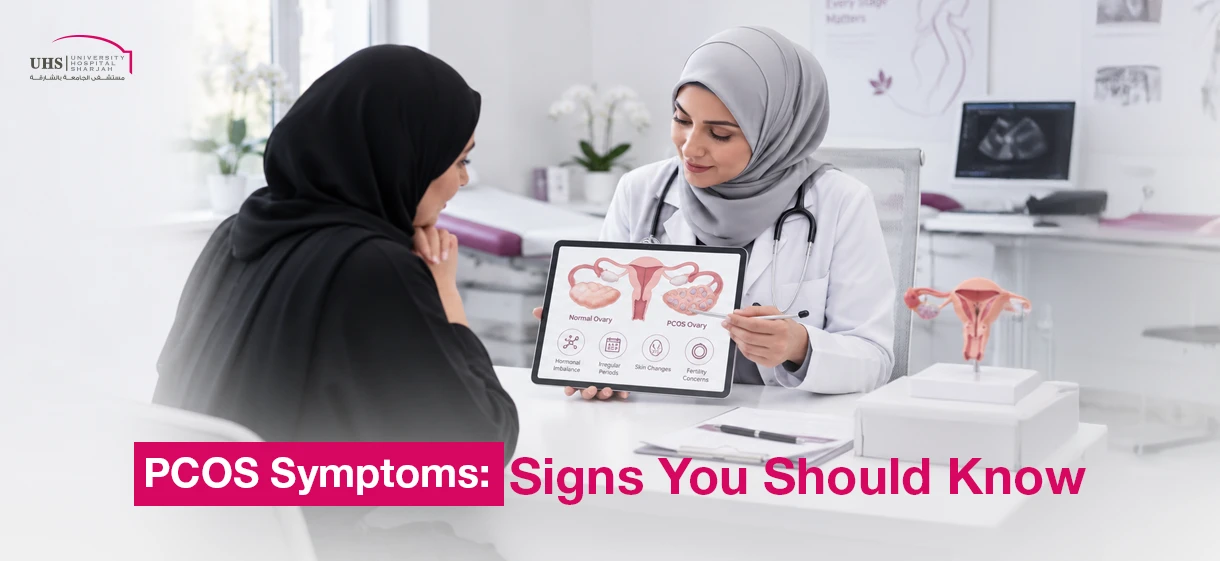
Polycystic ovary syndrome (PCOS) is a common hormonal and metabolic condition that can affect menstrual cycles, ovulation, fertility, skin, hair growth, and long-term metabolic health. While irregular periods are among the best-known PCOS symptoms, the condition can present differently from one woman to another. Some women first notice persistent acne or unwanted hair growth, while others seek medical advice because of difficulty conceiving, weight changes, or prolonged fatigue.
Recognizing the early signs of PCOS can help women receive appropriate assessment before symptoms begin to interfere significantly with reproductive or metabolic health. Importantly, PCOS does not always cause obvious ovarian cysts, and women do not need to be overweight to have the condition.
At University Hospital Sharjah (UHS), the Obstetrics & Gynecology Department provides comprehensive women’s healthcare supported by modern diagnostic services, reproductive health expertise, fertility support, and individualized treatment planning.
What Is Polycystic Ovary Syndrome (PCOS)?
Polycystic ovary syndrome is a hormonal disorder that affects ovarian function and may interfere with regular ovulation. It is commonly associated with irregular menstrual cycles, increased androgen activity, and signs of polycystic ovarian morphology, although a woman does not need to have every feature to be diagnosed with PCOS.
In adults, current international diagnostic guidance generally considers three major features:
Irregular or absent ovulation.
Clinical or biochemical signs of increased androgen activity.
Polycystic ovarian morphology on ultrasound or, in appropriate adult patients, elevated anti-Müllerian hormone according to guideline-defined use.
A diagnosis generally requires at least two of the relevant features after other conditions that could produce similar symptoms have been excluded. Diagnostic considerations differ in adolescents, where ultrasound and AMH should not be used in the same way because normal pubertal physiology can resemble PCOS.
PCOS can affect reproductive health, but its effects are not limited to the ovaries. It may also be associated with insulin resistance and an increased risk of metabolic problems over time.
What Causes PCOS Symptoms?
The exact cause of PCOS is not completely understood. Rather than having one single cause, the condition appears to involve a combination of hormonal, metabolic, genetic, and environmental factors.
Important mechanisms associated with PCOS symptoms include:
Higher androgen activity: Increased androgen levels can interfere with ovulation and contribute to acne, excess facial or body hair, and scalp hair thinning.
Insulin resistance: When cells respond less effectively to insulin, the body may produce more insulin. Higher insulin levels can influence ovarian hormone production and contribute to metabolic symptoms.
Ovulatory dysfunction: Irregular ovulation can cause delayed, unpredictable, or absent menstrual periods and may make conception more difficult.
Genetic susceptibility: PCOS often occurs within families, suggesting a hereditary component.
Metabolic factors: Weight and metabolic health may influence symptom severity, although women of any body size can develop PCOS.
ACOG notes that the cause remains uncertain but identifies insulin resistance, increased androgen levels, and irregular menstrual cycles as important interacting features.
The Difference Between an Ovarian Cyst and PCOS
Understanding ovarian cyst vs PCOS is important because the terms are sometimes incorrectly used interchangeably.
An ovarian cyst is a fluid-filled structure that develops in or on an ovary. Many ovarian cysts are functional and occur as part of the normal menstrual cycle. Other cysts can develop for different gynecological reasons.
PCOS, by contrast, is a hormonal and metabolic syndrome affecting ovulation and other body systems. The “polycystic” appearance seen in some women with PCOS usually refers to multiple small follicles rather than the same type of isolated ovarian cyst that may occur independently.
Having an ovarian cyst does not mean a woman has PCOS, and having PCOS does not require visible cysts on ultrasound. UHS specifically notes that polycystic ovaries on ultrasound are not required in every patient for diagnosis.
The causes of ovarian cysts and symptoms of cysts on ovaries also vary depending on the type of cyst. Some cause no symptoms, while others may cause pelvic pain, pressure, bloating, or menstrual changes. These symptoms require separate gynecological evaluation when persistent or severe.
Common Symptoms of PCOS
There is no single symptom profile that applies to every woman. Some women develop several obvious features, while others experience only mild PCOS symptoms.
Common manifestations include menstrual irregularity, excess hair growth, acne, oily skin, difficulty conceiving, scalp hair changes, and metabolic concerns.
Irregular Periods and Delayed Menstruation
Irregular menstrual cycles are among the most common PCOS symptoms.
Women may experience:
Periods that occur infrequently.
Delayed menstruation.
Unpredictable cycles.
Long intervals between periods.
Very heavy bleeding in some cases.
Absence of menstruation for extended periods.
These changes usually occur because ovulation is irregular or absent.
When ovulation does not occur regularly, the uterine lining may also be exposed to prolonged hormonal stimulation. Persistent menstrual irregularity therefore deserves medical evaluation rather than being assumed to be normal.
Excessive Unwanted Hair Growth
Higher androgen activity can cause excessive coarse hair growth, known medically as hirsutism.
Hair may become more noticeable on areas such as:
Face.
Chin.
Upper lip.
Chest.
Abdomen.
Back.
Upper thighs.
Excess hair growth is one of the recognized manifestations of PCOS, but other hormonal conditions can produce similar changes.
Sudden or rapidly progressing hair growth, especially when accompanied by other signs of marked androgen excess, requires medical assessment to exclude causes other than PCOS.
Hair Loss and Acne
PCOS can affect both scalp hair and skin.
Higher androgen activity may contribute to:
Persistent or severe acne.
Oily skin.
Acne that continues beyond adolescence.
Thinning of scalp hair.
Increased hair shedding in some women.
Persistent adult acne may be one of the early signs of PCOS, particularly when it occurs alongside irregular periods or excess facial and body hair.
However, acne and hair loss have many possible causes, so these symptoms alone cannot establish a PCOS diagnosis.
Difficulty Losing Weight and Insulin Resistance
Many women with PCOS have insulin resistance, meaning the body's cells do not respond to insulin as effectively as expected. The body may compensate by producing more insulin, which can contribute to metabolic changes and may interact with reproductive hormones.
Some women experience:
Weight gain.
Difficulty losing excess weight.
Increased abdominal weight.
Strong food cravings.
Darkened, velvety patches of skin, known as acanthosis nigricans.
However, PCOS should not be viewed as a condition that only affects women who are overweight. A woman can have PCOS while remaining within a healthy weight range.
Mood Changes and Persistent Fatigue
PCOS can also affect emotional well-being and energy levels.
Some women report:
Persistent fatigue.
Low energy.
Mood changes.
Anxiety.
Depressive symptoms.
Sleep difficulties.
These symptoms are not specific to PCOS and can result from many other medical or psychological conditions. Nevertheless, international and professional guidance recognizes the importance of psychological well-being in women with PCOS, and ACOG notes an increased risk of depression and sleep disorders in affected women.
Persistent fatigue may also warrant investigation for thyroid disease, anemia, sleep disorders, metabolic abnormalities, or other contributing conditions.
Do PCOS Symptoms Vary From Woman to Woman?
Yes. PCOS symptoms can vary considerably.
One woman may primarily experience irregular menstrual cycles and difficulty conceiving, while another may have regular-looking cycles but significant acne or excess hair growth. Others may have metabolic concerns such as insulin resistance without obvious weight gain.
Women can also experience different symptom severity at different stages of life.
Factors that may influence the clinical picture include:
Age.
Body weight and body composition.
Insulin sensitivity.
Hormonal profile.
Pregnancy plans.
Lifestyle.
Medications.
Family history.
Other endocrine or metabolic conditions.
This variation is one reason PCOS should not be diagnosed from a checklist of symptoms alone.
Women with mild PCOS symptoms may still benefit from evaluation if menstrual irregularity, excess androgen symptoms, or fertility concerns persist.
PCOS and Pregnancy: Does It Affect Fertility?
PCOS and pregnancy are closely linked because PCOS is a common cause of ovulatory infertility.
Women with PCOS may ovulate irregularly or may not release an egg during some menstrual cycles. This can make it harder to predict fertile days and may reduce the number of opportunities for conception.
However, PCOS does not mean that pregnancy is impossible.
Many women with PCOS conceive naturally, while others benefit from treatment aimed at restoring or stimulating ovulation. If pregnancy does not occur with initial measures, fertility specialists may consider additional options such as intrauterine insemination (IUI) or in vitro fertilization (IVF), depending on the individual situation and any other fertility factors.
The approach should consider:
Age.
Ovulation pattern.
Partner fertility factors.
Tubal health.
Duration of infertility.
Metabolic health.
Previous fertility treatment.
At UHS, PCOS care includes fertility support and coordinated reproductive care, and the hospital also has expertise in reproductive endocrinology and fertility services.
How Is PCOS Diagnosed?
There is no single blood test, ultrasound image, or symptom that confirms PCOS in every woman.
Diagnosis requires evaluation of the overall clinical picture and exclusion of other conditions that can cause similar menstrual or hormonal changes.
Current evidence-based criteria in adults generally require two of the major diagnostic features,ovulatory dysfunction, clinical or biochemical hyperandrogenism, and polycystic ovarian morphology or appropriately used AMH criteria,after alternative explanations have been excluded.
Clinical Examination and Ultrasound
Assessment typically begins with a detailed medical history.
The doctor may ask about:
Menstrual cycle frequency.
Age when periods began.
Changes in cycle regularity.
Acne.
Excess hair growth.
Scalp hair thinning.
Weight changes.
Previous pregnancies.
Fertility concerns.
Medications.
Family history of PCOS or diabetes.
Physical examination may include assessment of blood pressure, weight, skin changes, acne, unwanted hair growth, and other signs of hormonal imbalance.
A pelvic ultrasound may be performed to assess ovarian morphology and the uterine lining when appropriate.
Importantly, an ultrasound showing polycystic ovaries is not required in every woman with PCOS, and ovarian appearance alone does not establish the diagnosis.
Hormone Tests and Insulin Resistance Testing
PCOS blood tests and diagnosis may involve several laboratory investigations depending on the woman's symptoms.
Tests may include evaluation of:
Androgen levels.
Blood glucose.
Lipid profile.
Thyroid function.
Prolactin.
Other hormones when indicated.
International guidance recommends excluding conditions such as thyroid disease, hyperprolactinemia, and non-classic congenital adrenal hyperplasia where clinically appropriate because they may produce symptoms resembling PCOS.
Assessment of glucose metabolism is also important because PCOS is associated with insulin resistance and an increased risk of type 2 diabetes. The exact testing method depends on individual risk factors and clinical circumstances.
PCOS Diagnosis at University Hospital Sharjah
At University Hospital Sharjah, PCOS assessment is provided through the Obstetrics & Gynecology Department as part of comprehensive reproductive and hormonal healthcare.
UHS describes its PCOS evaluation as including review of menstrual cycles, fertility history, symptoms, weight changes, medications, and family history, together with physical examination and appropriate hormonal, metabolic, and imaging investigations.
The goal is not simply to identify ovarian changes but to understand how the condition is affecting menstrual health, fertility, skin and hair, metabolism, and long-term well-being.
Clinical Examination and Ultrasound
Clinical assessment may evaluate:
Menstrual irregularity.
Acne.
Excess hair growth.
Scalp hair thinning.
Blood pressure.
Weight and metabolic risk.
Fertility history.
Pelvic ultrasound may then be used when clinically appropriate to assess the ovaries and uterine lining.
UHS emphasizes that polycystic ovarian appearance on ultrasound is not mandatory for every PCOS diagnosis.
Hormone Tests and Insulin Resistance Testing
Laboratory evaluation may assess androgen levels and investigate other hormonal conditions that could explain the symptoms.
Depending on the individual patient, testing may also include:
Blood glucose.
Cholesterol and other lipids.
Thyroid function.
Additional hormonal investigations.
This allows the care team to develop a treatment strategy based on both reproductive and metabolic needs rather than focusing on a single symptom.
How Can PCOS Symptoms Be Managed?
There is currently no single permanent cure for PCOS, but its symptoms and associated health risks can often be managed effectively.
The appropriate PCOS Management and Treatment plan depends on:
The symptoms causing the greatest concern.
Whether pregnancy is currently desired.
Menstrual pattern.
Androgen-related symptoms.
Metabolic health.
Insulin resistance.
Weight and lifestyle factors.
Long-term health risks.
This means PCOS treatment for married and unmarried women should not be defined simply by marital status. Medical decisions should instead be based on symptoms, health needs, reproductive goals, age, and individual preferences.
Dietary and Lifestyle Changes
Healthy lifestyle measures are recommended for women with PCOS regardless of body size because they support general metabolic, cardiovascular, and reproductive health.
Depending on individual needs, this may involve:
A balanced and sustainable eating pattern.
Regular physical activity.
Healthy sleep habits.
Weight management where medically appropriate.
Avoiding smoking.
Management of blood pressure, glucose, and cholesterol when necessary.
For women with excess weight, even modest weight reduction may improve menstrual regularity and some metabolic or reproductive features. However, women who are not overweight should not be advised to lose weight unnecessarily.
Medications and Hormonal Regulation
Medication is selected according to the symptoms being treated.
Options may include hormonal therapy to help:
Regulate menstrual cycles.
Protect the uterine lining when periods are infrequent.
Reduce androgen-related symptoms such as acne or unwanted hair growth.
Insulin-sensitizing medication such as metformin may be considered for selected women when metabolic indications or insulin resistance are present. UHS lists insulin-sensitizing medication among its PCOS care options for appropriate patients.
Additional dermatological or targeted treatment may be recommended for persistent acne or unwanted hair growth.
The best Treatment for Polycystic Ovary Syndrome is therefore individualized rather than based on one standard medication for every patient.
Ovulation Induction Plans for Women Trying to Conceive
When pregnancy is the goal, treatment may focus on improving or inducing ovulation.
A fertility plan can include:
Optimizing metabolic and general health.
Monitoring menstrual cycles and ovulation.
Ovulation-inducing medication.
Further fertility evaluation when needed.
IUI in selected cases.
IVF when clinically appropriate.
PCOS is one of the most common causes of ovulatory infertility, but effective fertility treatments are available. Many women with PCOS can achieve pregnancy with appropriate care.
UHS provides fertility support as part of its Obstetrics & Gynecology services and has specialist expertise in reproductive endocrinology and assisted reproductive technology.
When Do PCOS Symptoms Require Medical Evaluation?
Consider seeing an obstetrician or gynecologist if:
Your periods are repeatedly irregular, very infrequent, or absent.
Menstruation remains delayed for prolonged intervals.
Acne is persistent or severe.
Facial or body hair is increasing.
Scalp hair thinning becomes noticeable.
You are having difficulty becoming pregnant.
You develop unexplained metabolic or weight changes.
You notice darkened skin associated with possible insulin resistance.
Symptoms are affecting emotional well-being or quality of life.
You already have PCOS and need pregnancy planning or long-term follow-up.
Early evaluation is also important when symptoms develop rapidly or are unusually severe, because other hormonal disorders can sometimes resemble PCOS.
At University Hospital Sharjah, the Obstetrics & Gynecology Department provides care from adolescence through reproductive years, pregnancy, and menopause, with access to diagnostic, fertility, and multidisciplinary services when required.
Take the Next Step With Personalized PCOS Care
PCOS can affect much more than menstrual cycles. From irregular periods and acne to insulin resistance and fertility concerns, the condition can present differently in every woman. A thorough assessment can help distinguish PCOS from other hormonal conditions and create an individualized plan based on symptoms, metabolic health, and reproductive goals.
University Hospital Sharjah provides comprehensive PCOS assessment through its Obstetrics & Gynecology Department, supported by diagnostic testing, fertility care, and specialist reproductive expertise.
Your reproductive health deserves the highest standard of care. Book your consultation today at University Hospital Sharjah to start your personalized treatment plan with our leading OB-GYN consultants.
Frequently Asked Questions
Can You Have PCOS Without Being Overweight?
Yes. PCOS can occur in women of any body size.
Although excess weight and insulin resistance are common in PCOS, being overweight is not a requirement for diagnosis. Women at a healthy weight may still experience irregular periods, excess androgen symptoms, acne, difficulty conceiving, or other PCOS features.
Persistent symptoms should therefore be evaluated regardless of body weight.
Does PCOS Completely Prevent Pregnancy?
No. PCOS does not completely prevent pregnancy.
It can make conception more difficult because ovulation may be irregular or absent, but many women with PCOS become pregnant naturally or with fertility treatment.
When treatment is needed, options may include medications to stimulate ovulation and, in selected cases, IUI or IVF.
What Is the First Test Used to Detect PCOS?
There is no single first test that independently detects PCOS.
Assessment normally begins with a medical history and clinical evaluation, particularly menstrual patterns and signs of androgen excess. Blood tests may then assess hormone levels and exclude other disorders, while ultrasound may be used when appropriate.
In adults, diagnosis is based on a combination of diagnostic criteria rather than one isolated laboratory or imaging result.
Can PCOS Be Completely Cured?
There is currently no permanent cure for PCOS, but symptoms and associated health risks can often be managed effectively.
Treatment may help regulate menstrual cycles, improve acne or unwanted hair growth, address metabolic concerns, and support fertility when pregnancy is desired. Because symptoms and reproductive goals can change over time, ongoing follow-up may be useful.