Plastic Surgery
25 Aug 2026
Keloid Scars: Causes, Prevention, and How to Remove Keloid Scars with Advanced Treatments
Reviewed by
Dr. Guloro Mukhidinova
Senior Specialist Dermatologist
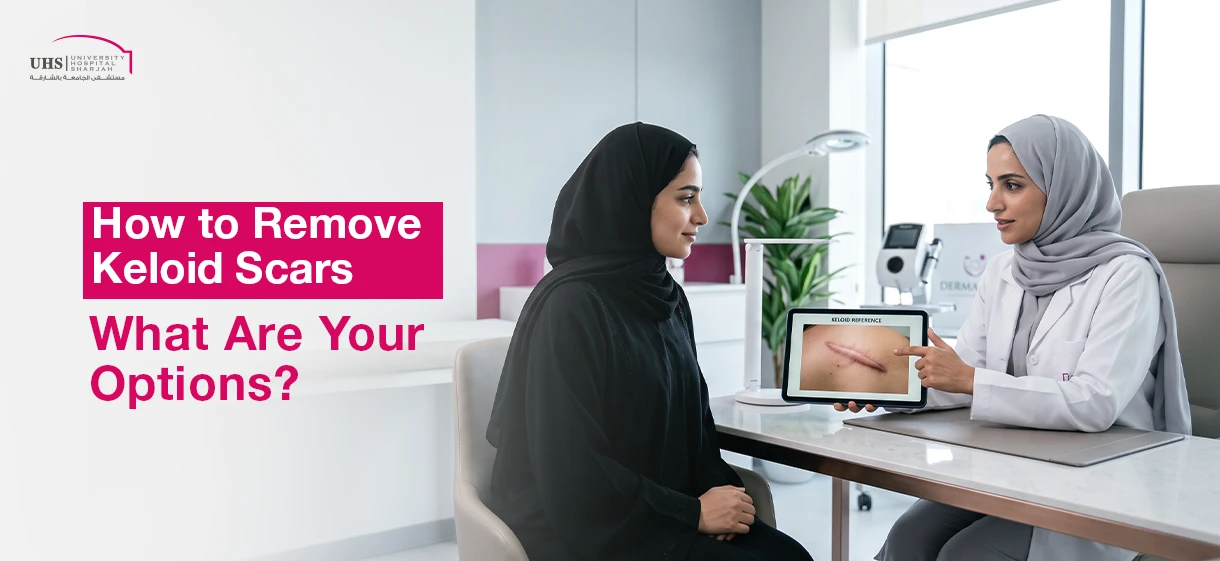
Keloid scars are raised areas of excessive scar tissue that may continue growing beyond the boundaries of the original wound. They can develop after surgery, acne, burns, vaccinations, injuries, or body piercings and may cause itching, pain, skin tightness, or emotional distress.
Patients researching how to remove keloid scars should understand that treatment can often flatten a keloid, relieve symptoms, and improve its color or texture, but complete and permanent removal is not always possible. Keloids have a recognized tendency to return, particularly when they are surgically removed without additional preventive treatment.
The most effective approach is usually a personalized plan that considers the scar’s location, size, age, symptoms, previous treatments, and the patient’s skin type and history of keloid formation. Treatment may involve silicone therapy, targeted injections, cryotherapy, laser procedures, surgery, or a combination of methods.
What Is a Keloid Scar and How Does It Form?
A keloid is an abnormal overgrowth of scar tissue that develops after the skin has been injured. During normal wound healing, the body produces collagen to repair the damaged area. Once the wound has healed, collagen production usually slows down.
In a keloid, the healing process becomes overactive. The body continues producing and depositing collagen and other components of scar tissue, causing the scar to become raised, firm, and larger than the original wound.
Keloids are benign and are not contagious or cancerous. However, they may continue to enlarge gradually and can cause significant discomfort or cosmetic concern.
A keloid may begin forming weeks or months after the original injury. In some cases, it develops slowly over several years. Rarely, a person may notice a keloid without remembering a significant injury to the area.
Difference Between Hypertrophic Scars and Keloid Scars: Hypertrophic Scar vs. Keloid
Keloid scars and hypertrophic scars are both caused by excessive scar formation, but they behave differently.
Hypertrophic scar | Keloid scar |
Remains within the boundaries of the original wound | Extends beyond the original wound |
Often develops soon after an injury | May develop weeks or months later |
May flatten gradually over time | May continue to grow |
Common after burns, surgery, or significant skin tension | Can follow minor injuries, piercings, acne, or surgery |
Often responds to conservative scar care | Frequently requires combination treatment |
Has a lower tendency to recur after treatment | Has a significant risk of recurrence |
An accurate diagnosis matters because keloids generally require more careful treatment planning and longer follow-up than ordinary or hypertrophic scars.
What Does a Keloid Scar Look Like and What Are Its Symptoms?
Keloids vary considerably in size, shape, thickness, and color. Their appearance may change as the scar matures.
Some remain small and stable, while others grow beyond the initial wound and become prominent enough to affect movement or daily comfort.
Physical Appearance and Texture: How They Look and Where They Start
A keloid may appear as:
● A raised, thick area of scar tissue
● A smooth or shiny growth
● A firm, rubbery, or hard lesion
● A rounded, oval, irregular, or claw-like scar
● A scar that spreads beyond the original injury
● A pink, red, purple, brown, or skin-colored area
● A scar that becomes darker than the surrounding skin
● A progressively enlarging bump after a wound has healed
Associated Symptoms: Itching, Pain, and Restricted Movement
Keloids are not always purely cosmetic. They may cause:
● Persistent or intermittent itching
● Tenderness
● Burning sensations
● Sharp or aching pain
● Increased sensitivity
● Skin tightness
● Discomfort when clothing rubs against the scar
● Limited movement when the scar is close to a joint
● Sleep disturbance caused by itching or pain
Large or thick scars near the neck, shoulders, chest, or joints may restrict the natural movement of the surrounding skin.
Most Common Locations for Keloid Scars on the Body
Keloids can develop anywhere, but they are especially common on:
● Earlobes and other pierced areas of the ear
● Upper chest
● Shoulders
● Upper back
● Neck
● Jawline
● Cheeks
● Areas affected by acne
● Surgical incision sites
● Vaccination sites
● Burn injuries
Keloids are less common on certain areas, such as the palms and soles, but individual patterns vary.
Causes of Keloid Scars and Who Is Most at Risk
The exact reason some people develop keloids while others do not is not fully understood. They are thought to result from an exaggerated wound-healing response involving excessive collagen production, prolonged inflammation, genetic predisposition, and abnormal regulation of scar tissue.
A person may be more likely to develop keloids if they:
● Have developed one previously
● Have a family history of keloids
● Have a darker skin tone
● Are in adolescence or early adulthood
● Experience repeated trauma to the same area
● Have wounds in high-risk locations such as the chest, shoulders, neck, or ears
● Develop prolonged inflammation or infection during healing
● Undergo procedures that create tension across the skin
Although keloids are more frequently observed in people with darker skin, they can affect individuals of any ethnicity or skin tone.
Keloid tendency is also not related to poor hygiene. It reflects the way the individual’s skin responds to injury.
Triggers for Keloid Formation: Surgery, Acne, Burns, and Body Piercings
Almost any skin injury can trigger a keloid in a susceptible individual.
Common triggers include:
● Surgical incisions
● Cesarean-section scars
● Acne lesions
● Chickenpox scars
● Burns
● Cuts and lacerations
● Ear or body piercings
● Tattoos
● Vaccinations
● Insect bites
● Skin infections
● Shaving injuries
● Repeated friction or pressure
Acne-related keloids are particularly common on the chest, shoulders, jawline, and upper back. Treating inflammatory acne early may reduce the number of new injuries that could later become scars.
Body piercings are another frequent trigger, especially on the earlobes and cartilage. A small piercing wound may lead to a scar that gradually becomes much larger than the original opening.
Genetic Factors and Skin Type
Genetics appear to play an important role in keloid formation. People with close relatives who develop keloids may have a higher risk themselves.
Keloids are more frequently reported in people with medium to deeply pigmented skin, although the underlying reason is complex and does not mean that every person with darker skin will develop them.
Age also matters. Keloids commonly develop between puberty and early adulthood, although they can appear at any age.
People who know that they are prone to keloids should inform their doctor before elective surgery, cosmetic procedures, piercings, tattoos, or other treatments that intentionally injure the skin.
Do Keloid Scars Cause Physical or Psychological Complications?
Keloids are benign, but they can still have a meaningful impact on physical comfort and emotional well-being.
Possible physical complications include:
● Chronic pain
● Persistent itching
● Skin sensitivity
● Recurrent irritation
● Restricted movement
● Difficulty wearing certain clothing or accessories
● Skin breakdown caused by repeated rubbing
● Discomfort when sleeping on the affected area
Possible psychological and social effects include:
● Reduced confidence
● Embarrassment about visible scars
● Avoidance of social situations
● Reluctance to wear certain clothes
● Anxiety about the scar becoming larger
● Distress after surgery or injury
● Dissatisfaction with body image
Keloids on the face, neck, ears, or chest may be particularly distressing because they are difficult to conceal.
The emotional impact is a valid reason to seek medical advice, even when the scar is not physically painful.
How Are Keloid Scars Accurately Diagnosed?
Keloids are usually diagnosed through a medical history and physical examination.
The doctor may assess:
● When the scar first appeared
● The injury or procedure that preceded it
● Whether it has continued to grow
● Whether it extends beyond the original wound
● Its size, shape, color, and firmness
● Symptoms such as itching, pain, or tightness
● Previous scar treatments
● A personal or family history of keloids
● Other medical conditions or skin problems
A dermatologist or plastic surgeon can often distinguish a keloid from a hypertrophic scar based on its appearance and growth pattern.
Additional assessment may be required when the diagnosis is uncertain. A skin biopsy may occasionally be considered to rule out another type of skin growth, although any procedure that injures keloid-prone skin must be planned carefully.
Medical review is particularly important when a scar:
● Appears without a clear injury
● Grows very rapidly
● Develops unusual color or ulceration
● Bleeds repeatedly
● Has signs of infection
● Does not have the typical features of a keloid
Latest Treatment Options for Keloid Scars: How to Remove Keloid Scars
There is no single treatment that works equally well for every keloid. The latest treatment options for keloid scars frequently involve combining two or more methods to flatten the scar, control symptoms, improve appearance, and reduce the likelihood of recurrence.
The appropriate plan depends on:
● Scar size and thickness
● Location
● Age of the scar
● Symptoms
● Skin tone
● Previous treatment response
● Whether the scar is still growing
● The patient’s tendency to form additional keloids
Older scars may require repeated sessions or combination therapy. Treatment for old keloid scars can still improve thickness, texture, itching, and discomfort, although complete disappearance may not be realistic.
Topical Treatments and Injections: Corticosteroid Injections and Silicone Gel Sheets
Silicone Gel Sheets for Scars
Silicone gel sheets or topical silicone gel may help soften, flatten, and reduce the visibility of raised scars. They may also be used preventively after a wound has fully closed in people at increased risk of keloid formation.
Silicone products usually need to be applied consistently for several months. Results depend on adherence, scar age, and individual response.
Silicone should generally be applied only after the wound has healed and the skin surface has closed, unless a clinician provides different instructions.
Corticosteroid Injections for Scars
Intralesional corticosteroid injections are among the most commonly used treatments for keloids. The medication is injected directly into the scar to reduce inflammation and collagen production.
Keloid treatment with injections may:
● Flatten the scar
● Soften firm tissue
● Reduce itching
● Relieve pain
● Slow further growth
Several treatment sessions may be needed, usually spaced over a number of weeks.
Possible side effects include:
● Temporary pain during injection
● Thinning of the skin
● Changes in pigmentation
● Small visible blood vessels
● Local tissue depression
Injection treatment may be combined with cryotherapy, laser therapy, silicone products, or other injected medications in selected cases.
Other intralesional treatments, such as 5-fluorouracil or certain alternative medications, may be considered by specialists when corticosteroids alone do not provide enough improvement.
Advanced Technologies: Laser Therapy and Cryotherapy
Laser Treatment for Keloids
Laser treatment for keloids may help reduce redness, flatten selected scars, improve texture, and relieve itching. Different laser systems target different characteristics of the scar.
Pulsed-dye laser may be used to address redness and vascularity, while other laser systems may be used to remodel the scar or improve the delivery of topical or injected medication.
Laser treatment is often most effective when combined with corticosteroid injections or another scar therapy rather than used alone.
Patients may require multiple sessions. Possible side effects include:
● Temporary redness
● Swelling
● Crusting
● Blistering
● Lightening or darkening of the skin
Changes in pigmentation may be more noticeable in darker skin tones, making careful technique selection and specialist experience particularly important.
Keloid management With Cryotherapy
Cryotherapy or cryosurgery freezes the scar tissue using a very cold substance, commonly liquid nitrogen.
Keloid removal with cryotherapy may gradually reduce the size and firmness of smaller keloids. It can be performed from the surface or, in selected settings, from within the scar.
Cryotherapy may be used before or after corticosteroid injections because freezing can soften or reduce the volume of the scar, potentially making injections more effective.
Possible side effects include:
● Pain
● Blistering
● Swelling
● Skin lightening
● Temporary crust formation
Cryotherapy may be less suitable for large scars or patients who are particularly concerned about pigment changes.
There is no need to wait for the scar to enlarge. At University Hospital Sharjah, targeted injections and laser-based techniques may be considered under the care of dermatology and cosmetic specialists to help minimize scar tissue and safely improve its appearance.
Book your medical consultation now and regain confidence in your skin.
Surgical Removal and Adjunctive Therapies to Prevent Recurrence
Surgical excision of keloids involves cutting out the abnormal scar and closing the wound carefully.
Surgery may be considered when the keloid is:
● Large
● Painful
● Functionally limiting
● Resistant to non-surgical treatment
● Located where removal could significantly improve contour or comfort
However, surgery alone carries a substantial risk of recurrence. In some cases, the new keloid may become larger than the original scar.
For this reason, surgical treatment is often combined with one or more preventive therapies, such as:
● Corticosteroid injections
● Silicone gel or sheets
● Pressure therapy
● Cryotherapy
● Laser treatment
● Other intralesional medications
● Carefully selected radiation therapy
Radiation Therapy for Keloids
Low-dose radiation therapy for keloids may be considered after surgical removal in selected recurrent or difficult cases. It is generally started shortly after surgery to reduce the activity of scar-forming cells and lower the risk of regrowth.
Radiation is not appropriate for every patient or every body area. The medical team must consider age, scar location, previous treatment, recurrence risk, and the potential long-term risks of radiation exposure.
The decision should involve careful discussion between the patient, plastic surgeon or dermatologist, and radiation specialist.
Non-Surgical Keloid treatment
For many patients, non-surgical keloid removal is the preferred starting point because it avoids creating a new surgical wound.
Non-surgical management may include:
● Corticosteroid injections
● Silicone gel or sheets
● Cryotherapy
● Laser therapy
● Pressure earrings for earlobe scars
● Combination injection treatments
● Symptom-relieving topical therapy
These methods may not completely eliminate the keloid, but they can significantly reduce its prominence and symptoms.
Recovery Period and Preventing Scar Recurrence
Recovery varies according to the selected treatment.
After injections, patients may experience temporary soreness, swelling, or discoloration around the scar.
Following cryotherapy, blistering or crusting may occur before the skin heals. Laser therapy may cause temporary redness, swelling, or sensitivity.
Surgical recovery depends on the keloid’s size and location. Patients may need wound care, activity restrictions, dressings, silicone therapy, pressure treatment, or postoperative injections.
Preventing recurrence may involve:
● Attending all scheduled follow-up visits
● Completing the recommended course of injections
● Using silicone gel or sheets as directed
● Wearing pressure garments or pressure earrings where appropriate
● Avoiding friction and unnecessary trauma
● Protecting the scar from excessive sun exposure
● Reporting early thickening, itching, or redness
● Starting additional treatment promptly if regrowth is suspected
Scar treatment often requires patience. Improvements may develop gradually over several months, and maintenance therapy may be necessary.
Why Early Treatment and Follow-Up Are Crucial
Newer keloids may respond better than large, long-standing scars. Early treatment may help:
● Slow further growth
● Reduce itching and pain
● Prevent the scar from becoming thicker
● Limit functional restriction
● Improve the response to conservative therapies
Long-term follow-up is important because recurrence can occur months or even years after treatment.
Patients should not assume that a scar is permanently controlled simply because it initially becomes flatter. Prompt assessment of renewed itching, firmness, redness, or growth can allow treatment to restart before the keloid becomes larger.
Successfully reducing a keloid and limiting its recurrence requires a personalized treatment plan tailored to the patient’s skin type, scar size, location, and previous response. The specialist team can help determine whether laser therapy, targeted injections, cryotherapy, surgery, or a combined approach is most appropriate.
Contact us today for a medical evaluation and build your custom treatment plan.
How to Prevent Keloid Scars in the Future
People with a personal or family history of keloids should take additional precautions before procedures that break the skin.
Not every keloid can be prevented, but early scar care and avoidance of unnecessary skin trauma may reduce the risk.
Preventive Tips After Surgery and Body Piercings
Preventive measures may include:
● Informing the surgeon about previous keloids
● Avoiding unnecessary elective skin procedures
● Choosing alternatives to body piercings and tattoos
● Treating acne early to reduce deep inflammation
● Keeping surgical wounds clean
● Following wound-care instructions carefully
● Avoiding unnecessary tension across the incision
● Using silicone gel or sheets after the wound closes
● Using pressure therapy when recommended
● Protecting healing scars from sunlight
● Attending early postoperative follow-up
● Reporting unusual thickening or itching promptly
People who have developed ear keloids may be advised to avoid additional ear piercings. Following surgical removal of an earlobe keloid, pressure earrings may be recommended as part of recurrence prevention.
Patients considering Plastic Surgery in Sharjah should disclose their history of abnormal scarring before any cosmetic or reconstructive procedure. This allows the surgical team to modify incision planning and develop a preventive scar-management strategy.
Common Mistakes and Warnings to Avoid: Home Remedies
Home remedies promoted for keloids often lack reliable evidence and may irritate the skin or trigger further inflammation.
Avoid:
● Cutting or shaving the keloid at home
● Tying thread around a scar
● Burning or freezing it with non-medical products
● Applying strong acids or bleaching agents
● Using unregulated injections
● Aggressive scraping or massage
● Repeatedly piercing through a keloid
● Using essential oils that cause irritation
● Applying silicone to an open or infected wound without medical advice
Trying to remove a keloid without medical supervision can cause infection, bleeding, skin injury, pigmentation changes, and additional scar growth.
The Best Plastic Surgeons and dermatology specialists assess both the visible scar and the patient’s tendency to form new keloids before recommending treatment.
A new or changing skin growth should not automatically be assumed to be a keloid without professional assessment.
Take the Next Step Toward Healthier-Looking Skin
Learning how to remove keloid scars begins with understanding that no single treatment is appropriate for every patient. Small or recent keloids may respond to silicone therapy, injections, or cryotherapy, while larger or recurrent scars may require laser treatment, surgical excision, or carefully planned combination therapy.
Because keloids frequently return, treatment should address both the existing scar and the risk of recurrence.
At University Hospital Sharjah, patients can receive a personalized assessment based on the scar’s location, thickness, symptoms, previous treatments, and individual skin characteristics.
There is no need to wait for the scar to enlarge, and book your medical consultation today to explore targeted injections, laser therapy, surgical options, and advanced combination treatments for your case.
Frequently Asked Questions
Do Keloid Scars Ever Completely Go Away?
Keloids do not usually disappear without treatment. Medical therapy can often flatten them, soften their texture, improve their color, and relieve itching or pain.
Complete removal may be difficult, and recurrence is possible even after apparently successful treatment. The goal is often long-term control and meaningful improvement rather than a guaranteed permanent cure.
Are Keloid Injections Painful?
Corticosteroid and other intralesional injections may cause temporary stinging, pressure, or discomfort because keloid tissue can be firm and sensitive.
The level of pain varies according to the scar’s size, location, and the individual’s sensitivity. The clinician may use cooling, topical anesthetic, local anesthetic, or other comfort measures when appropriate.
Can Keloids Be Removed With Laser Therapy Alone?
Laser therapy alone may improve redness, texture, itching, or thickness, but it does not reliably eliminate every keloid.
It is often combined with corticosteroid injections, topical medication, silicone therapy, or another treatment to improve results and reduce recurrence. The best approach depends on the scar’s characteristics.
When Should You See a Doctor Immediately?
Seek medical evaluation promptly if a scar:
● Grows rapidly
● Becomes increasingly painful
● Bleeds or develops an open sore
● Produces discharge
● Shows signs of infection
● Restricts movement
● Has an uncertain diagnosis
● Changes in an unusual way
● Causes significant physical or emotional distress