Obstetrics and Gynecology
04 Oct 2026
Fibroma: Causes, Diagnosis, and Treatment
Reviewed by

Dr. Fayez Abokharoub
HOD ,Consultant Obstetrician & Gynecologist
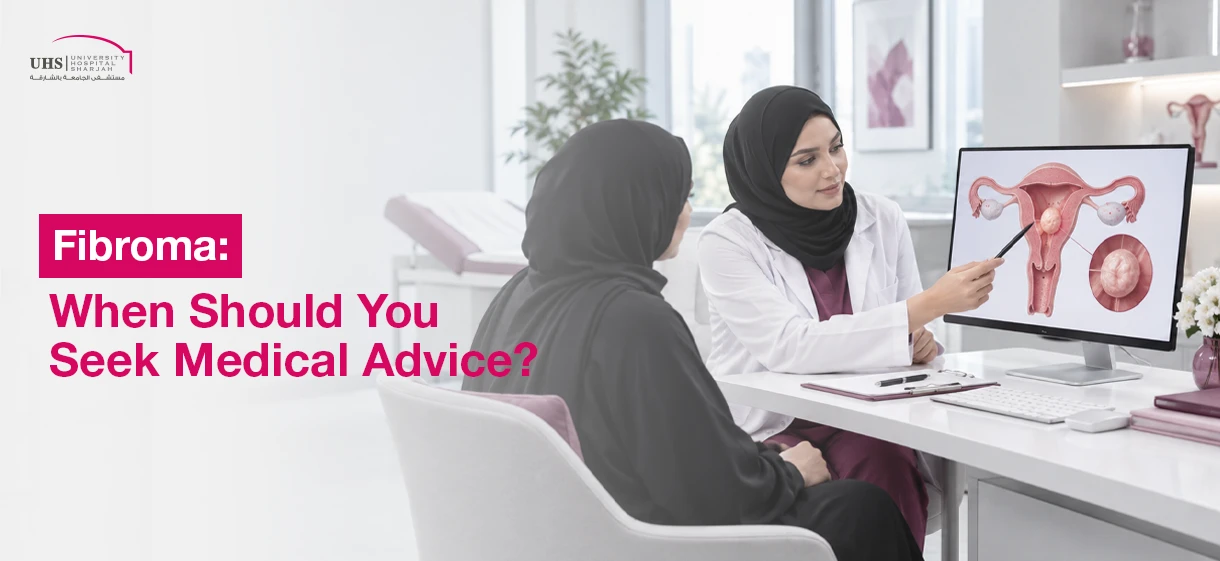
A fibroma, commonly referred to in the uterus as a uterine fibroid, is a non-cancerous growth that develops from the muscular and fibrous tissues of the uterus. Uterine fibroids, also known medically as leiomyomas or myomas, are common during the reproductive years and can vary significantly in size, number, and location.
Some women with fibroids have no symptoms and only discover them during a routine pelvic examination or ultrasound. Others may experience heavy menstrual bleeding, pelvic pressure, abdominal pain, frequent urination, constipation, discomfort during intercourse, or fertility-related concerns. The effect of a fibroid depends not only on its uterine fibroid size, but also on where it develops and whether it changes the shape of the uterine cavity.
Understanding fibroma symptoms, the possible causes, and the available management options can help women know when monitoring is sufficient and when medical treatment may be appropriate.
Are you experiencing symptoms that may be related to fibroids? Learn about the causes, symptoms, diagnosis, and treatment options, and find out when you should consult a medical specialist.
What Is a Fibroma?
A uterine fibroma, or uterine fibroid, is a benign growth arising from the smooth muscle and connective tissue of the uterus.
Fibroids may occur as a single growth or as multiple fibroids of different sizes. Some remain very small for years, while others enlarge over time and may alter the shape of the uterus or abdominal contour.
Unlike cancerous tumors, uterine fibroids are benign and almost never become cancerous. They are also not considered to increase the risk of developing other types of uterine cancer.
The term “fibroma” is sometimes used more broadly for benign fibrous tumors in other parts of the body. In this article, it refers specifically to fibroids in the uterus.
Where Do Fibromas Grow in the Uterus?
Fibroids can develop in different areas of the uterus.
They may grow:
Within the muscular wall of the uterus.
Toward the uterine cavity.
On the outer surface of the uterus.
On a stalk attached to the uterus in some cases.
Their location can strongly influence symptoms.
For example, even a relatively small fibroid that projects into the uterine cavity may contribute to heavy bleeding or fertility concerns, while a larger fibroid growing outward from the uterus may cause pressure on surrounding organs without significantly affecting menstruation.
For this reason, uterine fibroid size alone does not determine whether treatment is necessary.
Causes and Risk Factors
The exact causes of uterine fibroids are not fully understood. Research suggests that hormonal, genetic, and biological factors contribute to their development and growth.
Hormonal Factors
Estrogen and progesterone appear to play an important role in fibroid growth.
These reproductive hormones stimulate the uterine lining during the menstrual cycle and also appear to influence fibroid tissue. Fibroids often develop during the reproductive years and may shrink after menopause as hormone levels decline.
This hormonal relationship helps explain why fibroids may behave differently at different stages of a woman's life.
Family History
Fibroids can occur within families.
A woman with a close relative who has uterine fibroids may have a greater likelihood of developing them herself, suggesting that genetic susceptibility contributes to fibroma causes.
However, family history does not mean fibroids will definitely develop.
Age and Fertility-Related Factors
Fibroids are most commonly identified during the reproductive years and become particularly common in women in their 30s and 40s. They may occur at other ages as well.
Hormonal changes related to pregnancy, reproductive aging, and menopause may influence fibroid growth.
Pregnancy does not directly cause every fibroid, but changing hormone levels and increased blood supply to the uterus can influence existing fibroids in some women.
What Causes Fibromas?
There is no single confirmed explanation for why one woman develops fibroids while another does not.
Current evidence suggests that fibroma causes may involve several mechanisms working together, including:
Genetic changes within uterine muscle cells.
Estrogen and progesterone activity.
Growth factors that influence tissue development.
Changes in the extracellular matrix surrounding cells.
Genetic and familial susceptibility.
Fibroids may originate from a single smooth-muscle cell in the uterus that begins to multiply and form a distinct mass.
Lifestyle and metabolic factors may also be associated with fibroid risk, but they should not be viewed as a single direct cause.
What Are the Most Common Symptoms of Fibromas?
Many women experience no symptoms. When uterine fibroma symptoms occur, they depend on the size, number, and location of the growths.
Common symptoms can include:
Heavy or prolonged menstrual bleeding.
Painful periods.
Pelvic pain or pressure.
Lower abdominal or back discomfort.
Frequent urination.
Constipation.
Pain during intercourse.
Enlarged abdominal area.
Fertility or pregnancy-related problems in selected cases.
Heavy Menstrual Bleeding
Heavy menstrual bleeding is one of the most common fibroma symptoms.
Women may notice:
Periods becoming heavier than usual.
Bleeding lasting longer.
Frequent pad or tampon changes.
Passing larger blood clots.
Increasing tiredness or weakness.
Persistent heavy blood loss may lead to iron deficiency anemia.
Fibroids that distort or project into the uterine cavity are particularly likely to affect menstrual bleeding, although other fibroid locations can also contribute.
Lower Abdominal and Pelvic Pain
Fibroids can cause:
A dull ache in the lower abdomen.
Pelvic pressure.
Lower back discomfort.
Menstrual cramps.
A sensation of heaviness or fullness.
Large fibroids may cause the uterus or abdomen to become enlarged.
Rarely, a fibroid may cause sudden severe pain if its blood supply becomes significantly reduced.
Pressure on the Bladder or Bowel
Larger fibroids in the uterus can press against nearby pelvic organs.
Pressure on the bladder may cause:
Frequent urination.
Urinary urgency.
Difficulty emptying the bladder in some cases.
Pressure on the bowel may contribute to:
Constipation.
Rectal pressure.
Abdominal bloating.
Difficulty with bowel movements.
The location of the fibroid is particularly important in determining pressure-related symptoms.
Pain During Intercourse
Some women with fibroids experience pelvic discomfort or pain during sexual intercourse.
This symptom may be more likely when fibroids are located in certain areas of the uterus or when they contribute to pelvic pressure.
However, pain during intercourse has many possible gynecological causes, including endometriosis, pelvic floor disorders, ovarian conditions, and infections. Persistent symptoms should therefore be medically evaluated rather than assumed to be caused by a fibroid.
Fertility and Pregnancy Problems
Most women with fibroids are still able to become pregnant.
However, some fibroids,particularly those that distort the uterine cavity,may interfere with implantation or contribute to fertility difficulties.
Fibroids have also been associated with miscarriage and some pregnancy complications, although their impact varies considerably according to location, number, and size.
Because infertility has many possible causes, fibroids should not automatically be assumed to be responsible without a complete fertility assessment.
Do All Fibromas Cause Symptoms?
No.
Many uterine fibroids cause no symptoms and may be discovered incidentally during:
A routine pelvic examination.
Ultrasound performed for another reason.
Pregnancy imaging.
Evaluation of another gynecological condition.
Asymptomatic fibroids do not necessarily need treatment. ACOG notes that fibroids that are small, cause no symptoms, or occur near menopause may often be monitored rather than treated immediately.
Whether monitoring is appropriate depends on factors including size, location, growth pattern, age, symptoms, and fertility plans.
Types of Fibromas Based on Their Location
Fibroids are commonly classified according to where they grow in relation to the uterine wall.
Submucosal Fibroma
A submucosal fibroid grows toward or into the uterine cavity.
Even when relatively small, this type can have a significant effect on the uterine lining and may be associated with:
Heavy menstrual bleeding.
Prolonged periods.
Fertility difficulties.
Pregnancy-related concerns.
Because it changes the shape of the uterine cavity, location may be more clinically important than size alone.
Intramural Fibroma
An intramural fibroid develops within the muscular wall of the uterus.
This is one of the most common fibroid locations.
Depending on its size and position, it may cause:
Heavy periods.
Pelvic pressure.
Lower abdominal discomfort.
Enlargement of the uterus.
Fertility concerns in selected cases.
Subserosal Fibroma
A subserosal fibroid develops toward the outside of the uterus.
Because it grows outward, it may produce fewer menstrual symptoms but can cause pressure-related problems if it becomes large.
Possible symptoms include:
Pelvic heaviness.
Frequent urination.
Constipation.
Abdominal fullness.
Lower back discomfort.
Some fibroids can also grow on a stalk and are referred to as pedunculated fibroids.
How Are Fibromas Diagnosed?
Fibroma diagnosis usually involves a combination of medical history, pelvic assessment, and imaging.
The aim is to confirm whether fibroids are present and determine their number, size, and location.
Medical Examination
The doctor may ask about:
Menstrual bleeding.
Menstrual pain.
Pelvic pressure.
Urinary or bowel symptoms.
Fertility history.
Previous pregnancies.
Medications.
Family history.
Previous gynecological conditions.
During a pelvic examination, an enlarged or irregularly shaped uterus may suggest the presence of fibroids.
However, imaging is generally needed to confirm the diagnosis.
Ultrasound
Ultrasound is one of the main tests used for uterine fibroid diagnosis.
It uses sound waves to create images of the uterus and pelvic organs and can help determine:
Whether fibroids are present.
How many fibroids there are.
Their approximate size.
Their location within the uterus.
Depending on the clinical situation, ultrasound may be performed through the abdomen or transvaginally.
Other Imaging Tests
Additional investigations may be appropriate when more detail is required.
These can include:
MRI: Provides detailed information about the uterus, fibroid number, location, and size and may assist with treatment planning.
Sonohysterography: Uses fluid inside the uterine cavity with ultrasound to provide clearer visualization of fibroids affecting the uterine lining.
Hysteroscopy: Allows direct examination of the uterine cavity and can help identify submucosal fibroids.
Hysterosalpingography: May be considered during fertility evaluation in selected cases.
Not every woman requires all of these investigations.
Can Fibromas Affect Pregnancy?
Yes, but the effect varies widely.
Many women with fibroids have uncomplicated pregnancies. Others may experience increased risks depending on fibroid size, location, number, and whether the uterine cavity is distorted.
Potential concerns can include:
Difficulty conceiving.
Miscarriage in selected cases.
Pain caused by fibroid changes during pregnancy.
Altered fetal position.
Problems related to placental location.
Preterm birth in some cases.
Changes in delivery planning.
Fibroids located within the uterine cavity are generally more likely to affect implantation than fibroids growing toward the outside of the uterus.
Treatment before pregnancy is not automatically necessary for every woman with fibroids. Decisions should consider symptoms, previous pregnancy history, fibroid anatomy, age, and fertility goals.
Are Fibromas Dangerous?
In most cases, uterine fibroids are benign and are not dangerous.
They almost never become cancerous and are not associated with an increased risk of developing other uterine cancers.
However, fibroids can cause clinically important problems, including:
Heavy bleeding.
Iron deficiency anemia.
Significant pelvic pain.
Urinary or bowel pressure.
Reduced quality of life.
Fertility difficulties in selected cases.
Pregnancy-related complications.
A rapidly changing pelvic mass, new symptoms after menopause, or findings that do not look typical for a fibroid require specialist assessment to exclude other conditions rather than assuming they represent a routine fibroid.
How Are Fibromas Managed?
The most appropriate fibroma treatment depends on:
Symptoms.
Fibroid size.
Fibroid location.
Number of fibroids.
Age.
Severity of menstrual bleeding.
Presence of anemia.
Fertility plans.
Previous treatments.
Proximity to menopause.
Personal preferences.
Not every fibroid requires active intervention.
Monitoring and Watchful Waiting
Monitoring may be appropriate when:
Fibroids cause no symptoms.
Symptoms are mild.
Fibroids are relatively small and stable.
There are no significant fertility concerns.
The woman is approaching menopause.
Follow-up may involve clinical review and imaging when medically appropriate.
Because fibroids often shrink after menopause, observation may be reasonable for some women.
Medication
Medication is generally used to control symptoms rather than permanently remove fibroids.
Depending on the individual situation, treatment may include:
Pain-relieving medication.
Tranexamic acid for heavy menstrual bleeding.
Selected hormonal contraceptive methods.
Progestin-releasing intrauterine devices when appropriate.
GnRH-based treatments in selected patients.
Some medications may temporarily reduce fibroid size, while others mainly control bleeding or pain.
The appropriate option depends on symptoms, medical history, and pregnancy plans.
Non-Surgical Procedures
Some women may be candidates for procedures that treat fibroids without traditional open surgery.
Options can include:
Uterine artery embolization (UAE):
Small particles are introduced into the blood vessels supplying the fibroid, reducing its blood supply and causing it to shrink.
Radiofrequency ablation (RFA):
Uses controlled energy to heat and reduce fibroid tissue.
MRI-guided focused ultrasound:
Uses focused ultrasound energy guided by imaging in selected patients and specialized settings.
The suitability of these options depends partly on fertility plans because pregnancy data and recommendations differ between procedures.
Surgical Treatment
Surgery may be recommended when symptoms are severe, other treatments are unsuitable or ineffective, fibroids are large, or fertility-related anatomy requires treatment.
Common options include:
Myomectomy:
Removes one or more fibroids while preserving the uterus. This may be considered for women who wish to retain fertility or preserve the uterus.
Hysterectomy:
Removes the uterus and provides definitive treatment for uterine fibroids, but pregnancy is no longer possible afterward. It is generally considered when other options are unsuitable or ineffective, or in selected cases with very large or severe fibroids.
Some submucosal fibroids can also be removed hysteroscopically through the cervix without abdominal incisions.
The best uterine fibroid treatment should therefore be individualized rather than determined solely by fibroid size.
When Does a Fibroma Require Treatment?
Treatment may be considered when fibroids cause:
Heavy or painful periods that disrupt daily life.
Iron deficiency or anemia caused by blood loss.
Persistent pelvic pain.
Bleeding between periods.
Significant pressure on the bladder or bowel.
Difficulty emptying the bladder.
Fertility problems when a fibroid is believed to contribute.
Certain pregnancy-related concerns.
Progressive enlargement associated with significant symptoms.
Uncertainty about whether the pelvic growth is a typical fibroid.
A large fibroid does not automatically require surgery, just as a small fibroid can sometimes require treatment if its location causes significant bleeding or fertility problems.
When Should You See a Doctor?
Consider consulting an obstetrician and gynecologist if you experience:
Heavy periods.
Periods lasting longer than usual.
Persistent pelvic pain or pressure.
Bleeding between periods.
Pain during intercourse.
Frequent urination or difficulty emptying the bladder.
Persistent constipation associated with pelvic pressure.
Increasing abdominal size without an obvious explanation.
Fatigue, weakness, or shortness of breath that could indicate anemia.
Difficulty becoming pregnant.
Known fibroids with worsening symptoms.
Seek prompt medical attention for sudden severe pelvic pain or very heavy vaginal bleeding.
Understanding Your Fibroid Treatment Options
A fibroma can range from a small, symptom-free uterine growth that only requires observation to a larger or strategically located fibroid that causes heavy bleeding, pelvic pressure, anemia, or fertility concerns.
Effective management begins with determining the number, location, and size of the fibroids and understanding how they affect the patient's menstrual health, daily life, and pregnancy plans. Treatment may involve monitoring, medication, minimally invasive procedures, or surgery depending on the individual case.
Are you experiencing symptoms that may be related to fibroids? Learn about the causes, symptoms, diagnosis, and treatment options, and find out when you should consult a medical specialist.
Frequently Asked Questions
Can Fibromas Cause Heavy Bleeding?
Yes. Heavy or prolonged menstrual bleeding is one of the most common uterine fibroma symptoms.
Fibroids that affect the uterine cavity can be particularly likely to cause heavy bleeding, although other types may also contribute.
Persistent heavy periods can cause iron deficiency anemia, so medical evaluation is recommended when bleeding is affecting daily life or causing fatigue, dizziness, weakness, or shortness of breath.
Can Fibromas Affect Pregnancy?
Yes, some fibroids can affect fertility or pregnancy, but many women with fibroids become pregnant and have healthy pregnancies.
The potential impact depends on the uterine fibroid size, location, number, and whether a fibroid changes the shape of the uterine cavity.
Women who are planning pregnancy and have known fibroids may benefit from individualized gynecological or fertility assessment.
When Does a Fibroma Require Surgery?
Surgery is not required for every fibroid.
It may be considered when fibroids cause severe bleeding, persistent pain or pressure, significant anemia, fertility-related problems, or symptoms that do not improve with less invasive treatment.
The decision also depends on fibroid anatomy, reproductive plans, age, and patient preferences.
Can a Fibroma Turn Into Cancer?
Uterine fibroids are benign and almost never become cancerous. Having fibroids does not appear to increase the risk of other uterine cancers.
However, a new or unusual pelvic mass should always be appropriately evaluated because other, much rarer conditions can sometimes resemble fibroids.